Marlborough House 1 Middle Street, Taunton TA1 1SH
Aromatherapy
Remember – you can talk to us about your problems completely free and without obligation. Please call 01823 272227 or contact us
What is aromatherapy?
Aromatherapy is gentle massage using plant oils (essential oils). It is designed to treat you as a whole person, not just your symptoms. Natural oils are gently massaged into your body where they can deliver their beneficial healing powers, restoring your body's natural ability to balance, regulate, heal and maintain itself.
Aromatherapy massage is safe and gentle. The NHS has said of massage therapies that they ‘ease tension, stiffness and pain and enhance well-being. They may also improve breathing and circulation as well as having an overall relaxing and soothing effect.’
What to expect
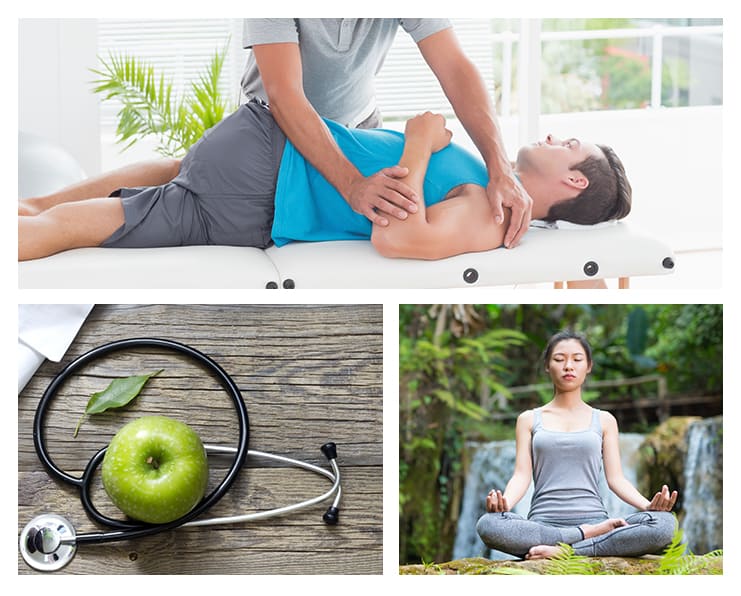
Your massage session at Marlborough House will be in a warm, comfortable room with soft music to help you relax. We’ll ask you about your health, your medical history and your lifestyle, so that we can tailor a massage treatment specifically for you. We go to great lengths to ensure you never feel embarrassed, and your body will be discreetly covered. In a typical session we may work on your back, neck, shoulders, arms, hands, legs and feet, working with a subtle blend of healing oils. Aromatherapy is a wonderful, caring, healing experience. Simply close your eyes, relax, and enjoy it!
Who and what we treat
Aromatherapy can enhance your health and sense of well-being, releasing long-term muscular tension and easing chronic pain. It has proved effective in improving circulation and reducing blood pressure, and can help rheumatic joints regain flexibility. And if you’re mentally or physically exhausted, essential oils can encourage better sleep, improve concentration, and reduce stress and anxiety.
Contact us
To contact us, please call 01823 272227 or click the link below.
RESEARCH TESTIMONIALS
Intensive care applications Journal of Advanced Nursing, Volume 21 Issue 1, Pages 34 - 40
Sensing an improvement: an experimental study to evaluate the use of aromatherapy, massage and periods of rest in an intensive care unit. Christine Dunn RN DPSN BSc(Hons)
There is widespread belief that the use of aromatherapy and massage in an intensive care environment offers a means of increasing the quality of sensory input that patients receive, as well as reducing levels of stress and anxiety Despite a wealth of anecdotal evidence in support of these claims, there have been few objective studies to evaluate the effects of these therapies In this experimental study 122 patients admitted to a general intensive care unit were randomly allocated to receive either massage, aromatherapy using essential oil of lavender, or a period of rest. Both pre- and post-therapy assessments included physiological stress indicators and patients' evaluation of their anxiety levels, mood, and ability to cope with their intensive care experience. Ninety-three patients (77%) were able to complete subjective assessments. There were no statistically significant differences in the physiological stress indicators or observed or reported behaviour of patients' ability to cope following any of the three interventions. However, those patients who received aromatherapy reported significantly greater improvement in their mood and perceived levels of anxiety. They also felt less anxious and more positive immediately following the therapy, although this effect was not sustained or cumulative.
This study assessed the effects of massage and aromatherapy massage on cancer patients in a palliative care setting.
There was a statistically significant reduction in anxiety after each massage on the STAI (P < 0.001), and improved scores on the RSCL: psychological (P < 0.001), quality of life (P < 0.01), severe physical (P < 0.05), and severe psychological (P < 0.05) subscales for the combined aromatherapy and massage group. The aromatherapy group's scores improved on all RSCL subscales at the 1% level of significance or better, except for severely restricted activities.
Massage with or without essential oils appears to reduce levels of anxiety. The addition of an essential oil seems to enhance the effect of massage and to improve physical and psychological symptoms, as well as overall quality of life.
Stress in the aged and physically- or mentally-challenged
The Journal of the Royal Society for the Promotion of Health, Vol. 117, No. 5, 324-329 (1997)
Stress is a major problem in hospitals, hospices and homes for the aged and physically or mentally-challenged. Aromatherapy is welcomed by nurses who want to be closer to their patient, and by doctors who can refer patients with stress-related disorders who do not respond to conventional medicines …
Studies have shown that essential oils have an effect on brainwaves and can also alter behaviour. It is possible that most of the effect of the oils is probably transmitted through the brain via the olfactory system. Used professionally and safely, aromatherapy can be of great benefit as an adjunct to conventional medicine or used simply as an alternative.